Saturday, June 12, 2010

Poems That Relate To Pro Athletes

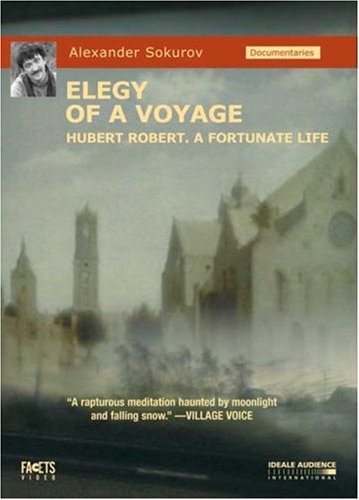
THE PREMIERE ... Film


"Initially there was a tree, a tree in autumn ...
had lost their leaves, fruit
but still had to eat the birds "


Poem
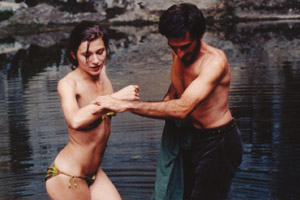
night and dream, travel in first person, in time and space, which starts in a Russian village and ends at the Boijmans Museum in Rotterdam, the sponsor of the film, after passing storms, seas blackened faces, forests, roads illuminated by the headlights of vehicles. All floating images and lavishly chained (mounting fluid and poetic to Tarkovsky, Sokurov which has always been considered the spiritual heir), always in motion, but with a calm of another era carried to the limit of the opacity and allow you to address, with demand and stripping end matters close to the unspeakable.

A mesmerizing voiceover, the lone voice of a man who resembles the Russian Ark, over these nostalgic and surreal images (this really a big difference between the two films), providing a melancholy tone to their personal memories. A religious connection with the images of great evocative power, without falling into mannerism effects achieved in accordance with the undulating dreamlike and unreal atmosphere of the story.

The film begins with a tree that has lost all its leaves but maintains its fruits. In the last minutes and inside the museum, in a picture, filmed as natural landscapes that have been seen before, under the moon, we see a flowering tree in the snow. Sokurov protects the flowers with their hands in an attempt to preserve the collective memory, past and future. Only art provides testimony to what has been irretrievably buried.


"Along the drive leading from Russia to the edge of Western Europe, in all the people I meet, I look for something in his eyes that reveal the joy, happiness and comfort. But I could only find two old boxes ... "

Alexandre Sokurov

Thursday, June 10, 2010

Best Matcha In Toronto

UGT. Saturday June 12 1920 h: Dallo Zolfo carbon, Luca Vullo / An 'you pray alone vorrei, Alina Marazzi


From sulfur coal, de Luca Vullo
Italy, 2008. 53 '. Vose Digital
Único pase
Cycle Novísimos cineastas Italianos
Patronage: Embassy of Italy in Madrid

Organización: Center for Studies in Italian Cinema ( CSCI), Cinémathèque UGT-Sevilla,
colaboración: Light Cinecittà, the Italian Institute of Culture of Barcelona, \u200b\u200bthe Italian Cultural Institute of MadridAgradecimientos: Adriana Chiesa Enterprises, Buskin, Classic Ltd, Fandango, Intramovies, Mir Cinematografica, Ondemotive, Paul Film, Rai Trade Pact


1946 Italo-Belgian. Sold (by the state) for a sack of coal. Unemployment, exploitation, migration, lack of protective measures at work, the integration challenges us to re-live the journey of thousands of Sicilians to the coal mines of Belgium. Dallo

Zolfo carbon is the socio-historical portrait of Italy in the 40's that led to millions of young Sicilians to slavery: the lack of work, the problem of migration, exploitation, lack of security at work, integration and loss identity. Topics that after more than half a century still filled news pages and television programs.

A journey through the bowels of the earth that the young director takes us to revive with an eye toward the past, when the Italians sold their country for a lot of coal, which became black prisoners, demons in hell of mines and dark.


Luca Vullo was born in Caltanissetta, in 1979. His training as a filmmaker began in Bologna, where he studied filmmaking at the DAMS, attended several workshops and laboratories and worked on numerous series.

then returned in Sicily, on tierra natal. Su primer viaje como comienza narrador-director with "veni UFUM cunta it," a historia sobre a socio-anthropological ciudad y el arte de por sí mismos valerse de su pueblo.

(En producción) The Voice of the Body - Power and Magic of Sicilian Gestures. 2008, From sulfur coal. 2007, Picciriddi. 2005, America and Back. 2005, Oro di Sicilia Caltanissetta. 2005, The Holy Week in Caltanissetta. 2005, A Caruso Nameless. 2003, Cume Veni You Cunt.


Un'ora one you vorrei of

Alina Marazzi Italy 2002, 55 'Single Pass

vose Cycle
Novísimos Italian filmmakers

The film guides the viewer into the delicate and touching territory memory through reading diaries, letters and records of the clinics where Marazzi Liseli Hoepli spent long periods, before committing suicide when her daughter was only 7 years. Through these texts and images of the films made by his grandfather since 1926, Alina Marazzi discovers his mother, his face reconstructed and celebrated through of memory. A film about nostalgia as common sense, sweet, essential and necessary to recover from a loss.

" My mother was born in 1938 and died in 1972, when I was 7. Tell your story through these old recordings of my grandfather for me has been how to restore dignity to the memory of the person who brought me to the world. A gift I want to do to me, her, all the children and all parents . "
(A. Marazzi)

Awards and Festivals: Sheffield International Documentary Festival 2006: Panorama Buenos Aires International Festival Of Independent Cinema 2003: Focus On Italian Documentaries Festival International De Films De Femmes De Créteil 2003: In Competition: Documentary Feature-Length Films. Jerusalem International Film Festiva l 2003: Panorama. Lincoln Center - Open Roads 2003: Panorama. Newport International Film Festival 2003: Panorama. Locarno Film Festival Internazionale Del 2002: Concorso Video. Torino Film Festival 2002: Best Documentary Italiano


Alina Marazzi. Born in Milan in 1964 and nacionalidatd Switzerland, has worked as Alina Marazzi assistant director for several feature films as well as video art projects. Vogliamo anche le rose is his third film as director and first as a screenwriter.

Wednesday, June 9, 2010

Can I Take A Bottle Of Shampoo On A Plane

Film UGT. Friday June 11 1920 h: Ballo a tre passi, Salvatore Mereu

Italy, 2003. 107 '. 35 mm
vose
Single Cycle Pass Novísimos Italian filmmakers

Sponsorship: Ambasciata d'Italia to
Madrid Organisation: Centro Italiano di Studi sul Cinema ( CSCI), Film UGT-Sevilla
Collaboration: Cinecittà Luce, Istituto Italiano di Cultura di Barcellona, \u200b\u200bIstituto Italiano di Cultura di Madrid
Thanks: Adriana Chiesa Enterprises, Buskin, Classic SRL, Fandango, Intramovies, Mir Cinematografica, Ondemotive, Paul Film, Rai Trade

Divided into four episodes, Spring, Summer, Autumn and Winter, the film tells the stories of different characters of different ages closely linked with the culture of Sardinia. Four stories in four seasons: Andrea, Peppeddu, Isten Macangiu and see the ocean for the first time. Michele loses his virginity to a young French woman who frequents his sailing club. Predu Ziu his daughter reunited after long years. Giorgio celebrated the marriage of a distant niece ...

The discovery of an almost unprecedented cinematic landscape, with traces of realism and melodrama.

is the directorial debut of Salvatore Mereu (Dorgali, 1965). Settimana della Critica in the 2003 Venice Film Festival got the prize. Official Selection at the Sundance Film Festival and Rotterdam.

"Looks sharp, small epiphanies. Many of the actors are not professionals and are well run, searching, sometimes insistent" magical realism "(moving the last goodbye of the aviator, ebullient finale.) Some cool intellectualism the characters and weakens Mereu's eyes but Ballo a tre passi is part of a push in the blossoming talent of Sardinia. "(Fabio Ferzetti, Il Messaggero 03/09/2003)


Salvatore Mereu. Graduate DAMS of Bologna and Experimental Centre of Cinematography of Rome (address). directed three short films in the 90's, in 2004 won the David di Donatello for best new director with his first feature, Ballo a tre passi (2003). His second feature, Sonetàula (2008), based on the book by Giuseppe Fiori was at the Berlinale in the Panorama section.
rumen
Notte (1996), Miguel ( 1999), Il Mare (2004), Ballo a tre passi (2003), Sonetàula (2008)

Tuesday, June 8, 2010

Green And Black Volleyball Shoes

Film UGT. Thursday June 10 1920 h: The Illusion Travels by Streetcar Luis UGT Buñuel Film

Illusion Travels by Streetcar of Luis Buñuel
Mexico, 1953. 90 '. One pass is

Cycle Luis Buñuel in Mexico

In collaboration with the Institute of Mexico in Spain

Upon learning that the tram 133 in which they have worked all their lives, will be removed from service, Tassels and is Tarrajas get drunk and decide to steal it. During the night, serving an eclectic group of passengers that includes a dandy, a pious couple, a teacher with his students and a trace Matanzas. The next morning, Tassels and Tarrajas try to return the tram but face the obstinacy of Santa Pinillos, a retired inspector intends to betray them.

Undoubtedly, the comedy was one of the genres that Luis Buñuel cultivated with great pleasure throughout his career. Possessing a keen sense of humor and a great capacity for irony, Buñuel found in the genre of comedy suitable for displaying their own unique worldview, in which the absurdity and chance coexist with normal daily. In

Illusion Travels by Streetcar improbable constantly breaks in the lives of the characters, without this leading to permanent alteration of their destinies. The journey that follows the tram stolen Tarrajas Tassels and is full of fun and unusual incidents that Buñuel always considered natural in the Mexican context:

"You know that in public vehicles in Mexico is possible, or was at that time find people carrying crates of fruit, or live turkeys in order: the most amazing things, so I thought that the tram workers travel the Trail with rooms res, and the old pious with the image of a saint. "

After a brief story line developed by Mauricio de la Serna and José Revueltas, Buñuel developed a movie-style trip to heaven Rise (1951). The similarity between the two films go beyond the line plot. " is true that in both films appear Lilia Prado making the same gesture to ride the carriage, with one foot in the stirrup and the mid-thigh skirt" Buñuel says. " acknowledge that here is something really mine , my youth and that of any of my generation. When women with those long skirts, climbed on the tram, caught him by sight, to see if they taught some calf. Of course, in both films the skirt is shorter, and Lilia force shows some of the thighs. Gestures are recorded n. "

Unlike Ascent to Heaven (1951), Illusion Travels by Streetcar casts a more subtle and suggestive sensuality. The pieces of meat going up the tram reminiscent of butchers Peter's dream The Forgotten (1950), in which his mother offers him a bloody steak is caught by the crab. In the pastoral, Lilia Prado plays a seductive Eve expelled from paradise by sinful. In Tram A child looks out the window a woman who arranged the means to view. Consider

long as a lesser film in the films of Luis Bunuel Illusion Travels by Streetcar particular has retained its charm over the years and has overcome the "aging" that many films are condemned. Made unpretentious art, this film remains as enjoyable today as when it was released.